HVLS Midori Fan: Smart Investment Before Peak Season
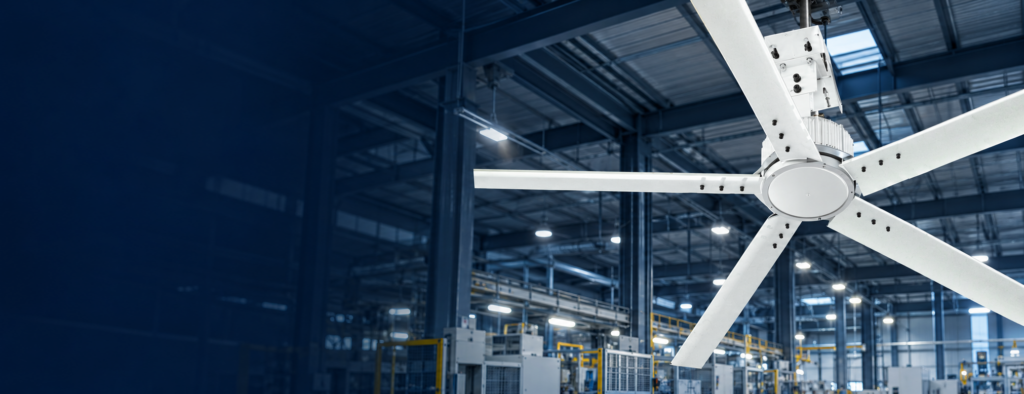
As factories enter the year-end peak season — with overtime shifts, increased production, and rising electricity bills — one question stands out for plant managers: how to maintain stable operations without skyrocketing energy costs? High-Volume Low-Speed (HVLS) ceiling fans are becoming a practical answer for many manufacturers. Among them, Midori Fan has emerged as a highly considered choice thanks to its optimized design for industrial spaces and energy-saving features.
How is HVLS different from traditional fans and air conditioning?
Simple but effective working principle
HVLS fans operate on the principle of air circulation: large blades rotating slowly generate massive airflow, pushing hot air up and distributing cooler air evenly throughout the workspace. Unlike small fans blowing directly, HVLS fans treat the entire air mass of a warehouse, eliminating hot spots and reducing temperature fluctuations — thus lowering the need for overworked HVAC systems.
Quick comparison benefits
-
Covers a large area with fewer units compared to traditional fans.
-
Lower energy consumption per cubic meter of air processed compared to many combined solutions (case-dependent).
-
Improves thermal comfort for workers, contributing to higher productivity.
Midori Fan: Technical differences and real benefits
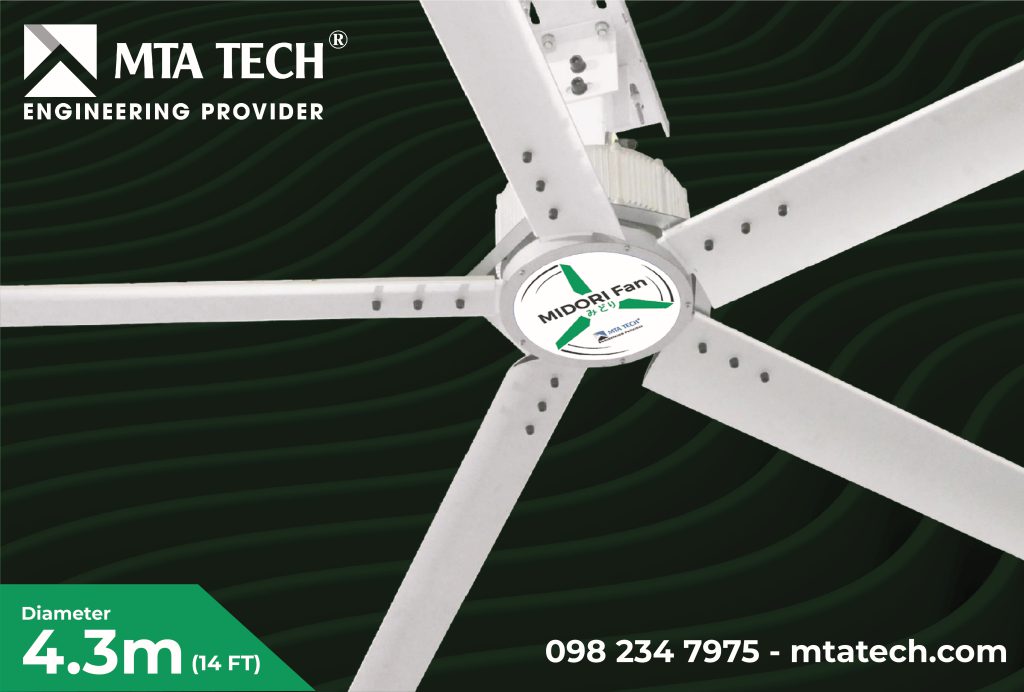
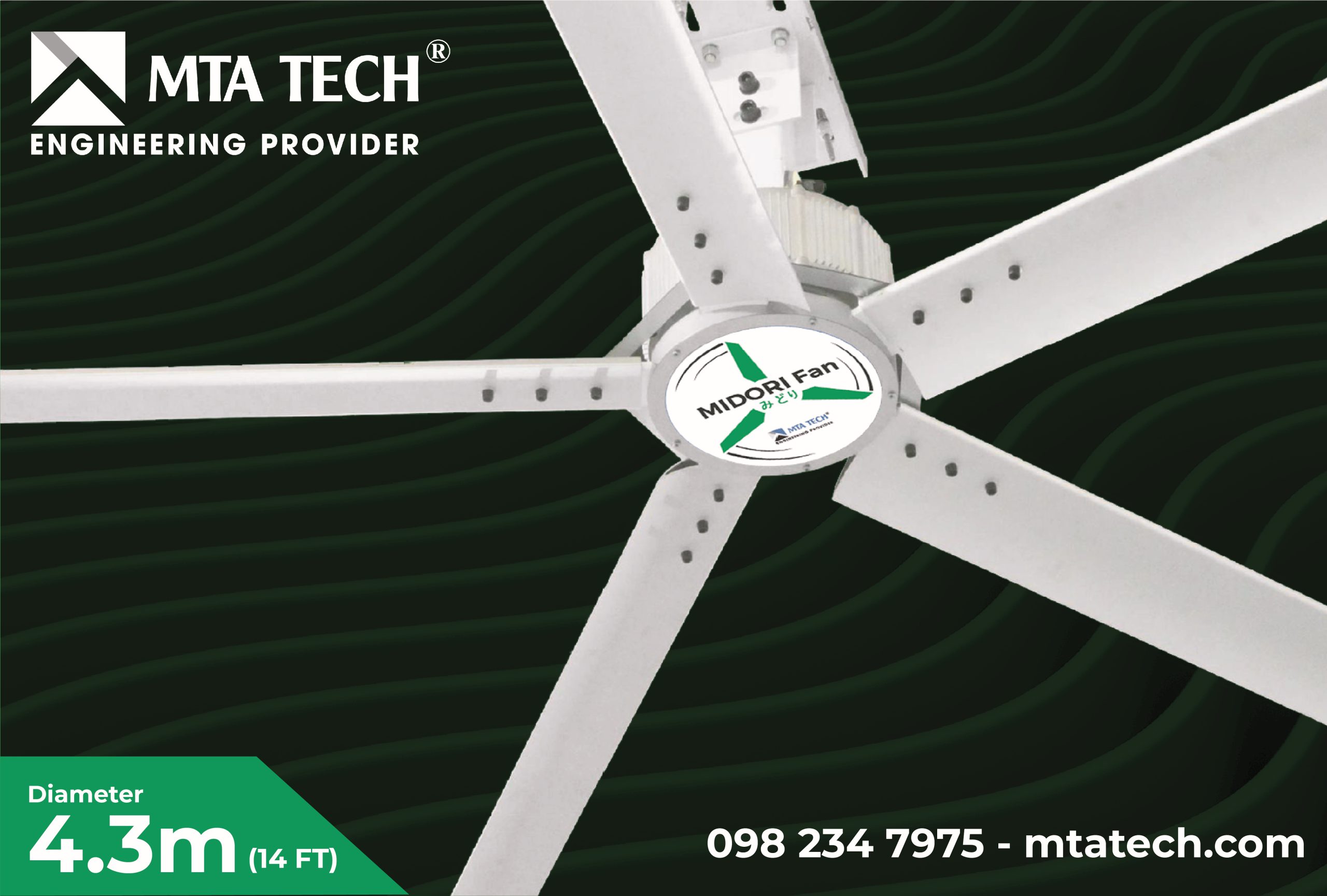
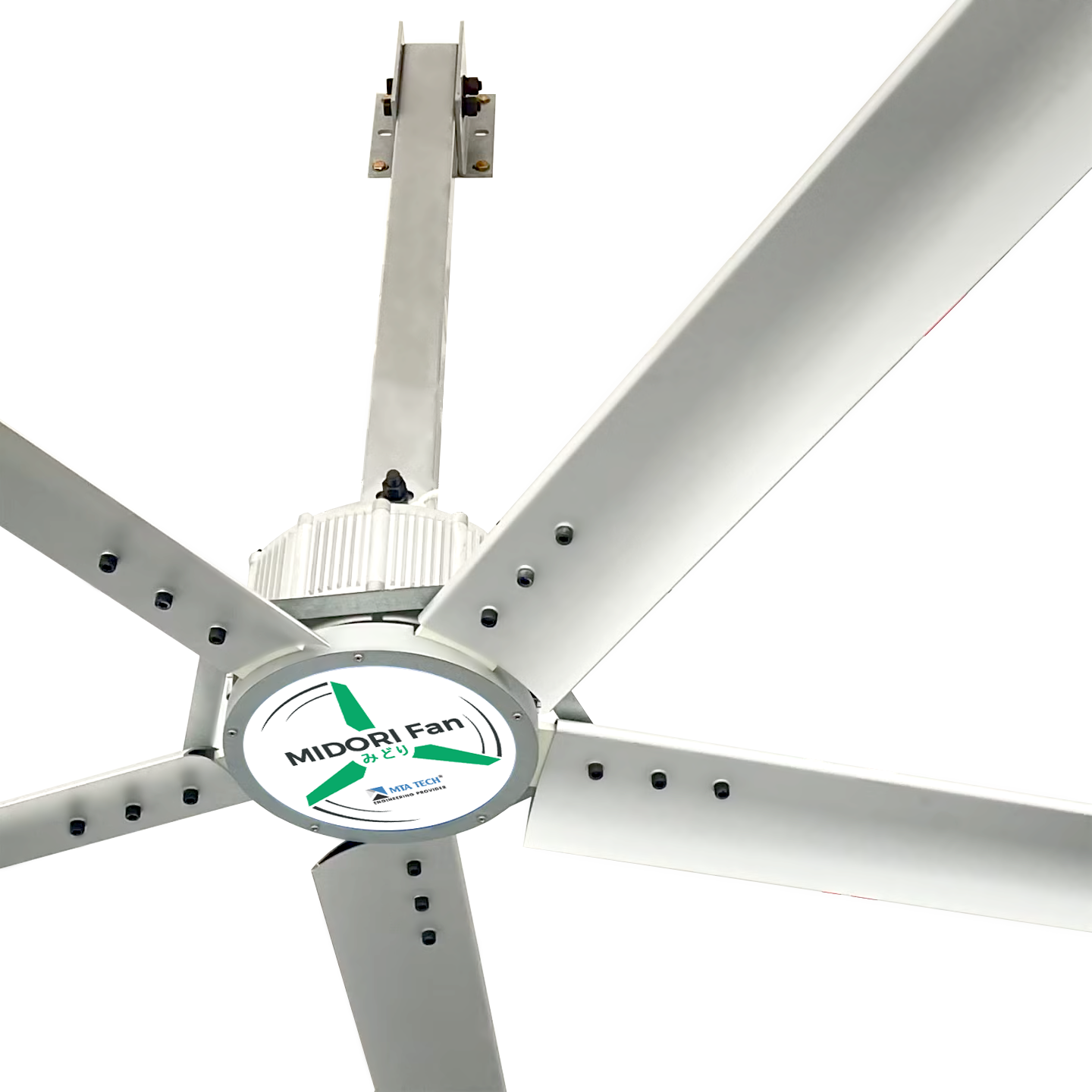
Midori Fan is more than “just a big fan.” According to product information distributed by MTA TECH, its highlights include:
-
3rd generation servo PM motor for higher efficiency and lower power draw.
-
High airflow capacity suitable for large industrial spaces.
-
Low noise operation, ensuring a comfortable working environment.
-
Long service life with minimal maintenance compared to conventional systems.
These technical features make Midori Fan an optimal choice for factories aiming for sustainable cooling and long-term energy savings.
Why Midori Fan helps save energy during peak season
Reducing HVAC load
In enclosed areas, Midori Fan helps distribute cooled air evenly, allowing HVAC systems to avoid running continuously at maximum capacity. This leads to fewer operating hours, reduced peak demand, and lower electricity bills during high-demand months.
Energy efficiency per cubic meter of air
With its efficient motor and aerodynamic blades, HVLS delivers massive airflow while consuming relatively little energy compared to running multiple small fans or oversizing air conditioners. This is particularly valuable in large, high-ceiling spaces where traditional fans are ineffective.
Non-financial benefits with real value
Reducing heat stress improves worker comfort, boosts productivity, and minimizes absenteeism — hidden ROI factors often overlooked when only evaluating energy bills.
How to calculate ROI for Midori Fan
Step 1: Collect baseline data
-
Average monthly/quarterly electricity bills (HVAC and fans if possible).
-
Operating hours of current cooling equipment.
-
Area and ceiling height of each production zone.
Step 2: Estimate potential energy savings
-
Refer to technical reports/power conversion tables from the supplier (MTA TECH provides model-specific data).
-
Estimate reduced HVAC operating hours when integrating HVLS and calculate potential kWh savings.
Step 3: Calculate investment cost and payback period
-
Total cost = purchase + installation + minimal annual maintenance.
-
Payback = Total investment / Annual energy savings.
-
Include indirect benefits (productivity, equipment longevity) for a full ROI picture.
Checklist before choosing and installing Midori Fan
-
Ceiling height: ensure safety clearance and select the right model size.
-
Coverage area: estimate how many units are required for each zone.
-
HVAC compatibility: plan integration for maximum savings.
-
Noise requirements: confirm dB levels if near offices.
-
Maintenance & after-sales service: warranty and spare parts support.
-
Certifications & technical specs: request full documentation from distributor.
Practical application scenarios
-
Scenario A (factories with HVAC): install HVLS fans in work zones to complement AC and reduce daily cooling loads.
-
Scenario B (non-refrigerated warehouses): HVLS replaces multiple local fans, improving ventilation and reducing humidity.
-
Scenario C (assembly areas): prioritize low-noise models to avoid communication disruption.
Conclusion
Before peak season drives up energy bills, investing in the right cooling solution — such as Midori Fan HVLS — can be a strategic move to control costs, improve working conditions, and support sustainability goals.
Want to know if Midori Fan is right for your factory?
Contact MTA TECH to request: free site survey, customized ROI report, and on-site demo.