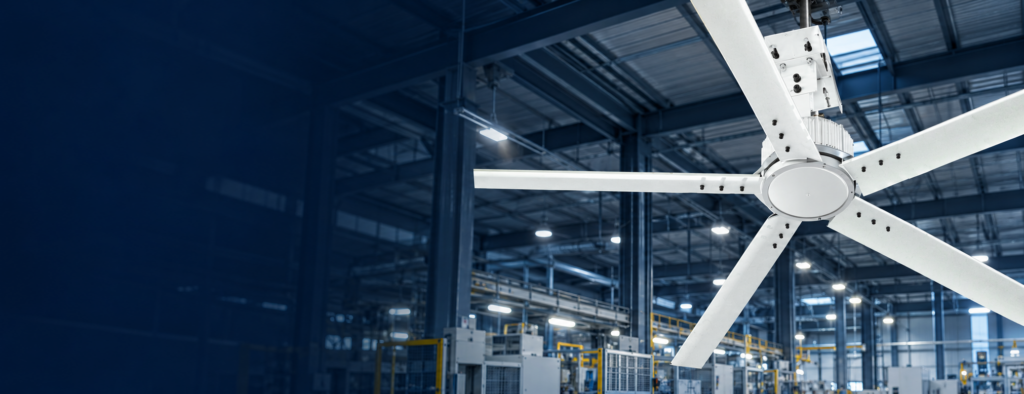

Current Cold Spells Do Not Change the “Big Picture” of 2026’s Climate
According to climate experts, cold air incursions during transitional seasons are normal phenomena and typically last only for short periods. While they may provide temporary comfort, they are not sufficient to alter the overall annual temperature trend.
Experience from recent years shows that even in years with occasional localized cold spells, hot seasons tend to arrive earlier, last longer, and start with higher baseline temperatures from the beginning of the dry season. As a result, short-term cool weather can create a false sense of ease, while the real thermal pressure on factories often emerges shortly afterward.
For production facilities with large floor areas, high labor density, and continuous operations, these changes directly impact productivity, operating costs, and workplace conditions if cooling solutions are not prepared in advance.
2026 Remains Among the Hottest Years on Record
According to forecasts by the UK Met Office, global average temperatures in 2026 could be approximately 1.4°C higher than pre-industrial levels, placing the year among the four hottest recorded since 1850.
Notably, the Met Office emphasizes that current warming trends are long-term and systemic. High temperatures are no longer rare extreme events, but are gradually becoming the “new normal” of the global climate.
In Southeast Asia and Vietnam, this trend is often reflected in elevated baseline temperatures from the early stages of the dry season. As baseline temperatures rise, heat stress appears earlier and persists longer, making cooling needs for factories, warehouses, and production areas a continuous operational challenge rather than a seasonal concern.

Heat in Vietnam Expected to Arrive as Early as Late February 2026
These international forecasts align closely with assessments from Vietnam’s National Center for Hydro-Meteorological Forecasting regarding early 2026 weather patterns.
According to the Center, the Southeast region may experience heatwaves from late February to early March 2026, while localized heat could appear in the Northwest as early as March. Importantly, average temperatures from January to March 2026 are forecast to be higher than long-term averages in many regions.
This indicates that early-year periods can no longer be considered a mild transition before peak heat. For factories operating continuously, thermal stress may arise early, driving a sharp increase in cooling demand from the first quarter of the year.
Early Preparation Helps Avoid Operational Pressure During Peak Heat
In practice, many businesses only begin implementing cooling solutions once temperatures have already risen significantly. However, operational experience shows that waiting until peak heat often comes with considerable risks.
From late February through the end of the second quarter, demand for cooling system installation typically surges. When many factories deploy solutions simultaneously, equipment shortages and overloaded survey and installation schedules become difficult to avoid. This can delay improvements to working conditions precisely when cooling demand is at its highest.
As a result, preparing cooling solutions early in the year is increasingly becoming a strategic choice for manufacturing enterprises.
MIDORI Fan – A Proactive Cooling Solution for Factories in 2026
In this context, MIDORI Fan is being chosen by many businesses as an efficient and sustainable cooling solution for large spaces. Beyond basic cooling, MIDORI industrial ceiling fans are increasingly viewed as a long-term operational investment.
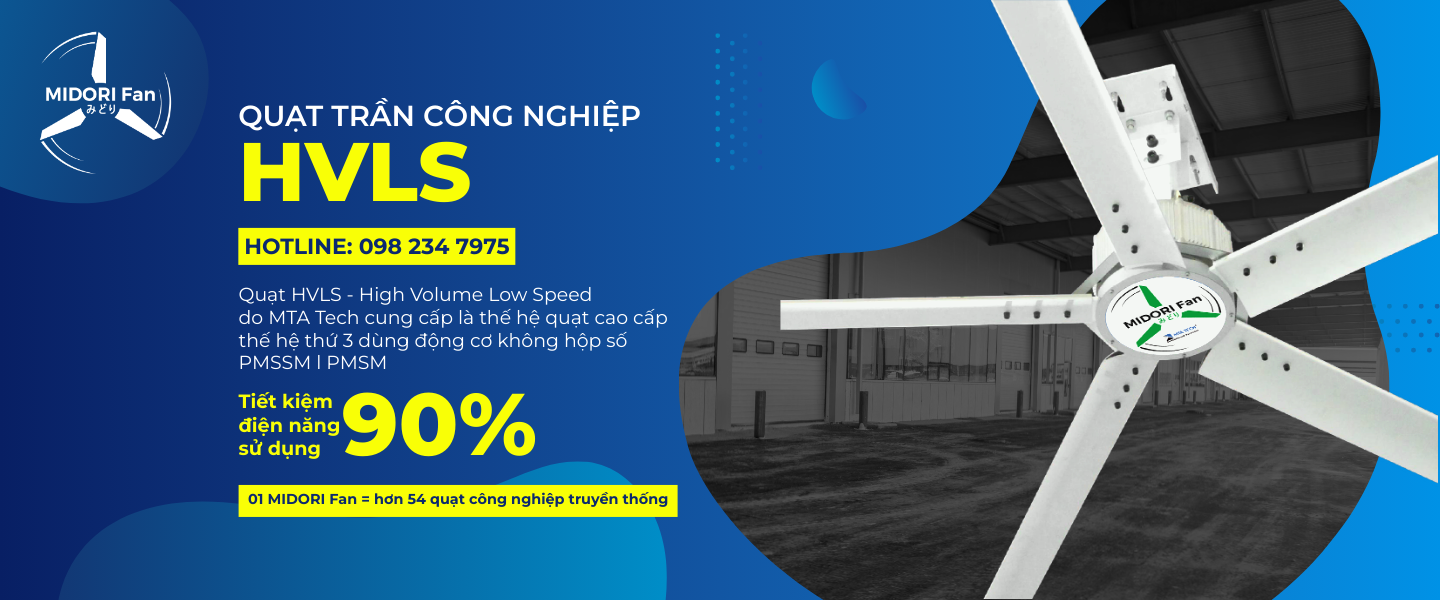
With an HVLS (High Volume, Low Speed) industrial ceiling fan design and blade diameters exceeding 7 meters, each MIDORI Fan can effectively cover an area of 1,000–1,500 m². The low-speed, high-volume airflow ensures uniform air circulation throughout the factory, reduces heat stratification at high levels, and delivers a natural cooling sensation for workers.
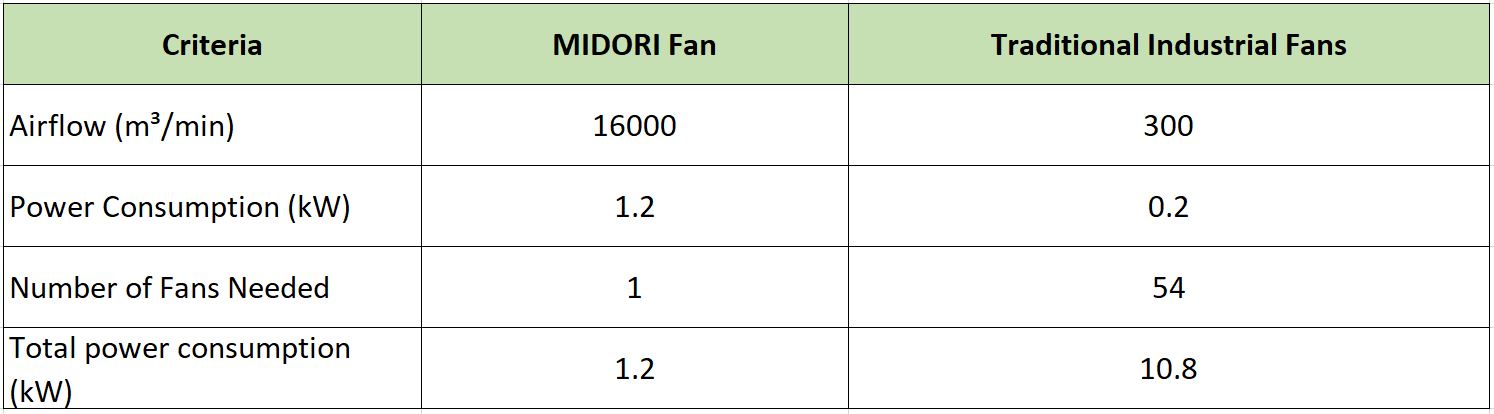
Under standard operating conditions, power consumption is only around 1.2 kW per fan, significantly lower than deploying dozens of small fans or other forced cooling solutions. As a result, perceived temperatures in the workspace can be reduced by 4–6°C without harsh airflow or excessive energy consumption.
Energy Savings and Clear Financial Benefits
In real-world applications, a single MIDORI Fan can replace 50–60 conventional wall-mounted fans while also reducing the operating time and load of industrial air-conditioning systems. By optimizing airflow and achieving even temperature distribution, total energy consumption for factory cooling can be reduced by up to 80–90%, particularly during prolonged peak heat periods.
This efficiency means MIDORI Fan is not merely a cost item, but a value-generating investment. With low operating costs, long equipment lifespan, and consistent monthly energy savings, the return on investment (ROI) for MIDORI Fan systems typically ranges from 10 to 14 months. In other words, businesses can recover their investment within the first year of operation, while continuing to benefit economically for many years thereafter.
Early Preparation Is a Strategy, Not a Temporary Response
Climate forecasts clearly indicate that current cold spells are temporary, while 2026 remains a hot year in the long-term climate trend, with heat in Vietnam likely to arrive as early as late February.
In this context, proactively deploying cooling solutions from the start of the year is no longer a short-term reaction, but an integral part of long-term operational strategy. As an industrial ceiling fan solution designed for large spaces, MIDORI Fan enables businesses to proactively control workplace environments, optimize energy costs, and remain fully prepared for the heat challenges of 2026.
Hotline: 098 234 7975
Email: sales@mtatech.com