Is Your Factory Truly Optimizing Its Chiller System — or Simply Cooling Enough?
Amid rising energy costs, many manufacturing businesses are reassessing the operational efficiency of their central cooling systems. Chillers remain the primary solution for large-scale industrial facilities. However, a critical question arises:
Is the system being fully optimized and strategically managed — or merely operated at a basic functional level?
In practice, numerous factories have invested significantly in high-capacity Chillers, allocating substantial capital expenditure. Yet, working conditions often fail to meet comfort expectations, while electricity bills continue to increase year after year.
When the Chiller Performs Properly — But Efficiency Falls Short
From a technological standpoint, the Chiller itself is rarely the root cause of inefficiency. The bottleneck often lies in the spatial characteristics of industrial buildings.
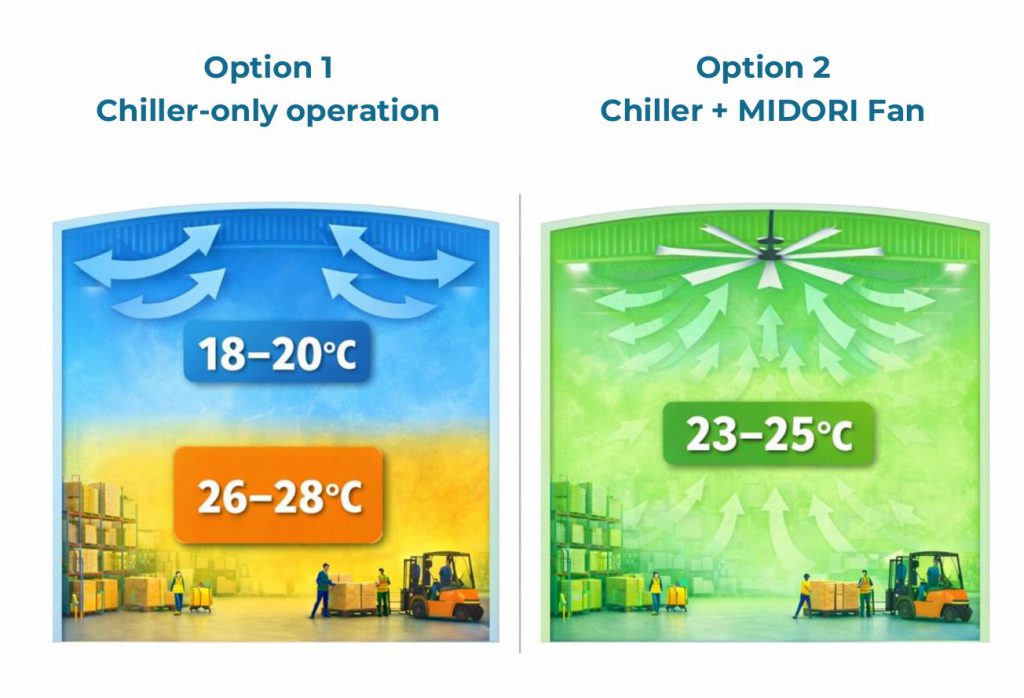
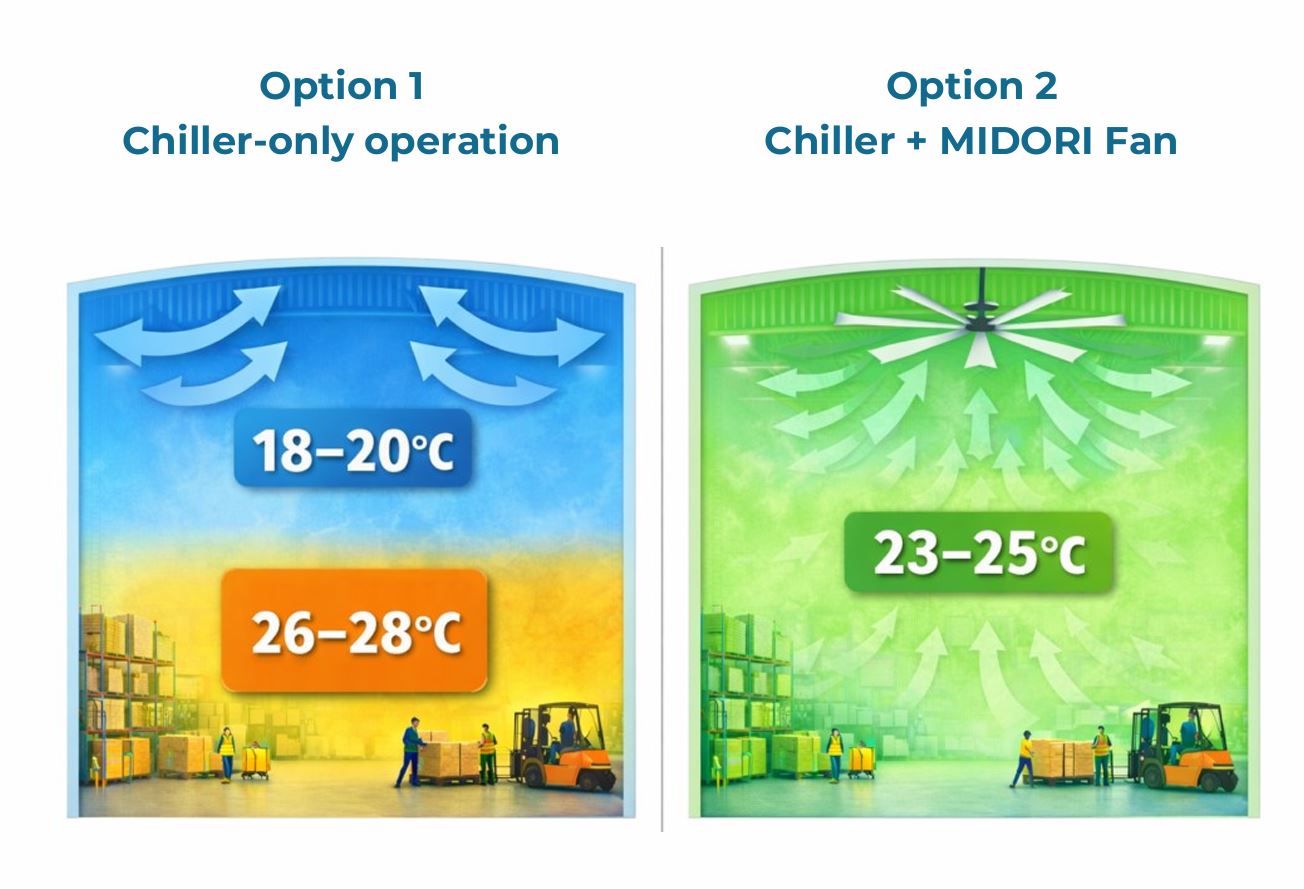
In facilities with high ceilings, cooled air tends to accumulate near the roof level, while the occupied working zone remains warm and poorly ventilated. This phenomenon, known as thermal stratification, forces the Chiller to operate under high load conditions for extended periods merely to compensate for uneven air distribution.
The consequences include:
-
Rising energy consumption proportional to operating hours
-
Decreasing Coefficient of Performance (COP)
-
Accelerated wear due to sustained high compressor load
-
Limited improvement in perceived temperature at worker level
In many cases, factories fall into a familiar cycle: increasing cooling capacity leads to higher operational costs, yet real-world effectiveness does not improve proportionally.
System Optimization Does Not Mean Increasing Capacity
A growing consensus among HVAC professionals emphasizes that system optimization should not begin with increasing cooling capacity. Instead, it should focus on optimizing air distribution and circulation.
When cooled air is delivered effectively to the occupied zone, the Chiller operates under reduced thermal stress and improved efficiency.
Energy audits and HVAC performance studies indicate that improving airflow management can allow facilities to increase the Chiller setpoint temperature while maintaining thermal comfort.
Industry benchmarks suggest that for every 1°C increase in cooling setpoint, energy savings of approximately 5–8% may be achieved, depending on system configuration and airflow effectiveness.
While not absolute, this range is widely accepted as a conservative reference within the HVAC industry.
HVLS Industrial Ceiling Fans — The Often Overlooked Component
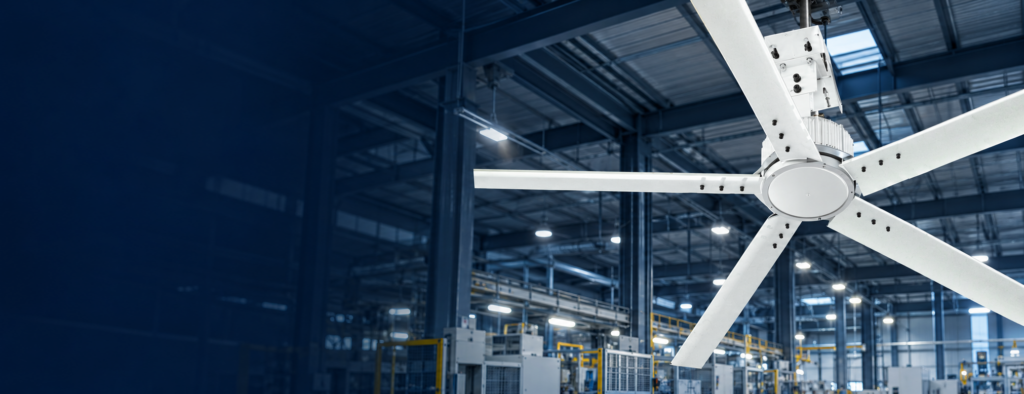
Among supporting solutions for cooling system optimization, HVLS (High Volume, Low Speed) industrial ceiling fans are increasingly adopted in modern manufacturing environments.
With large diameters and low rotational speeds, HVLS fans generate high air volume movement with minimal energy consumption. Their primary function is to eliminate thermal stratification and redistribute conditioned air from the upper zone to the occupied space below.
When properly integrated with a Chiller system, overall HVAC performance improves significantly:
-
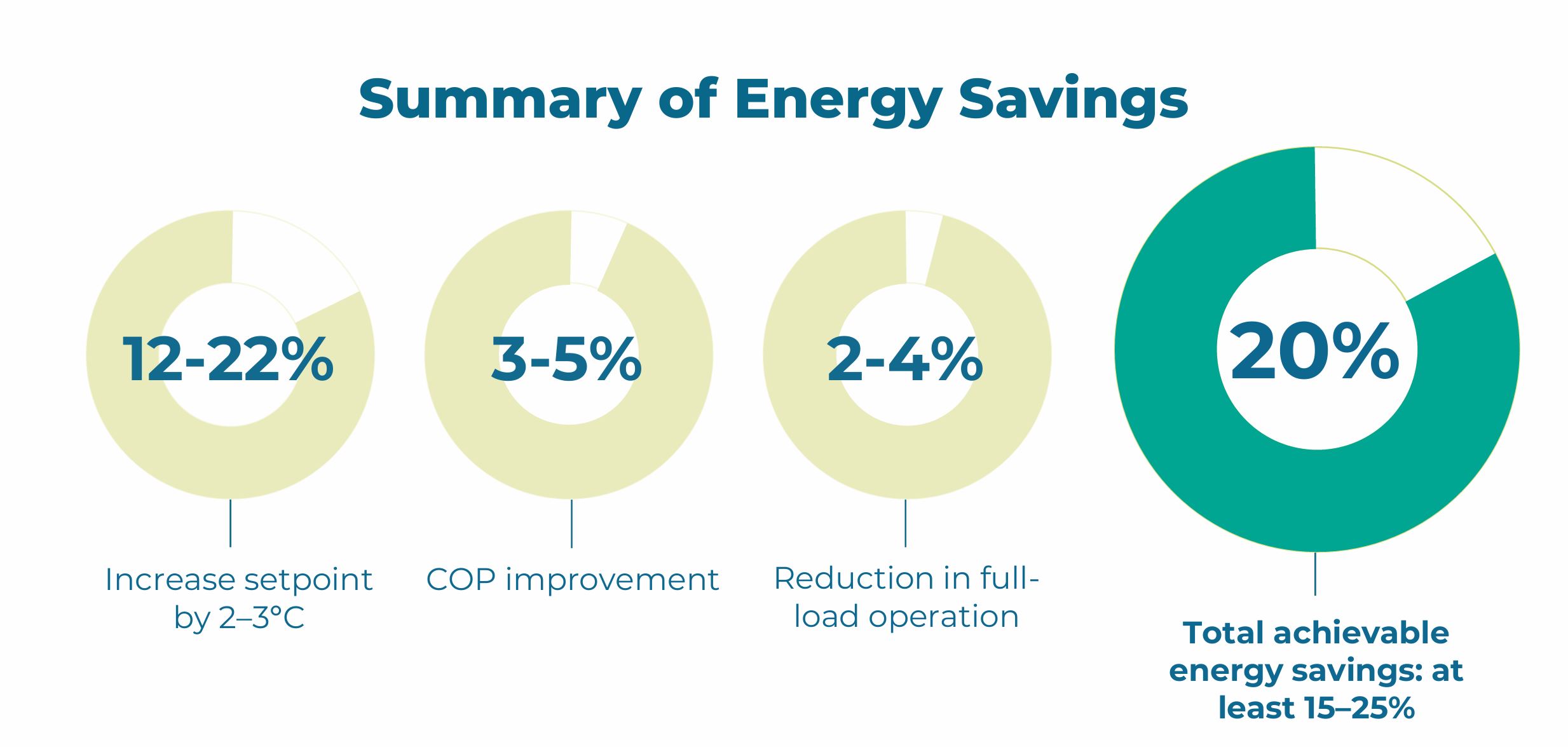
Perceived temperature in the occupied zone may decrease by approximately 4–6°C
-
The Chiller operates at reduced load intensity
-
Setpoint temperature can often be increased by 2–3°C under suitable operating conditions
-
Total annual energy savings commonly range between 15–25%, depending on facility scale and configuration
These figures are frequently validated in field measurements and energy performance reports, rather than based solely on subjective comfort feedback.
MIDORI Fan and Long-Term HVAC Optimization Strategy
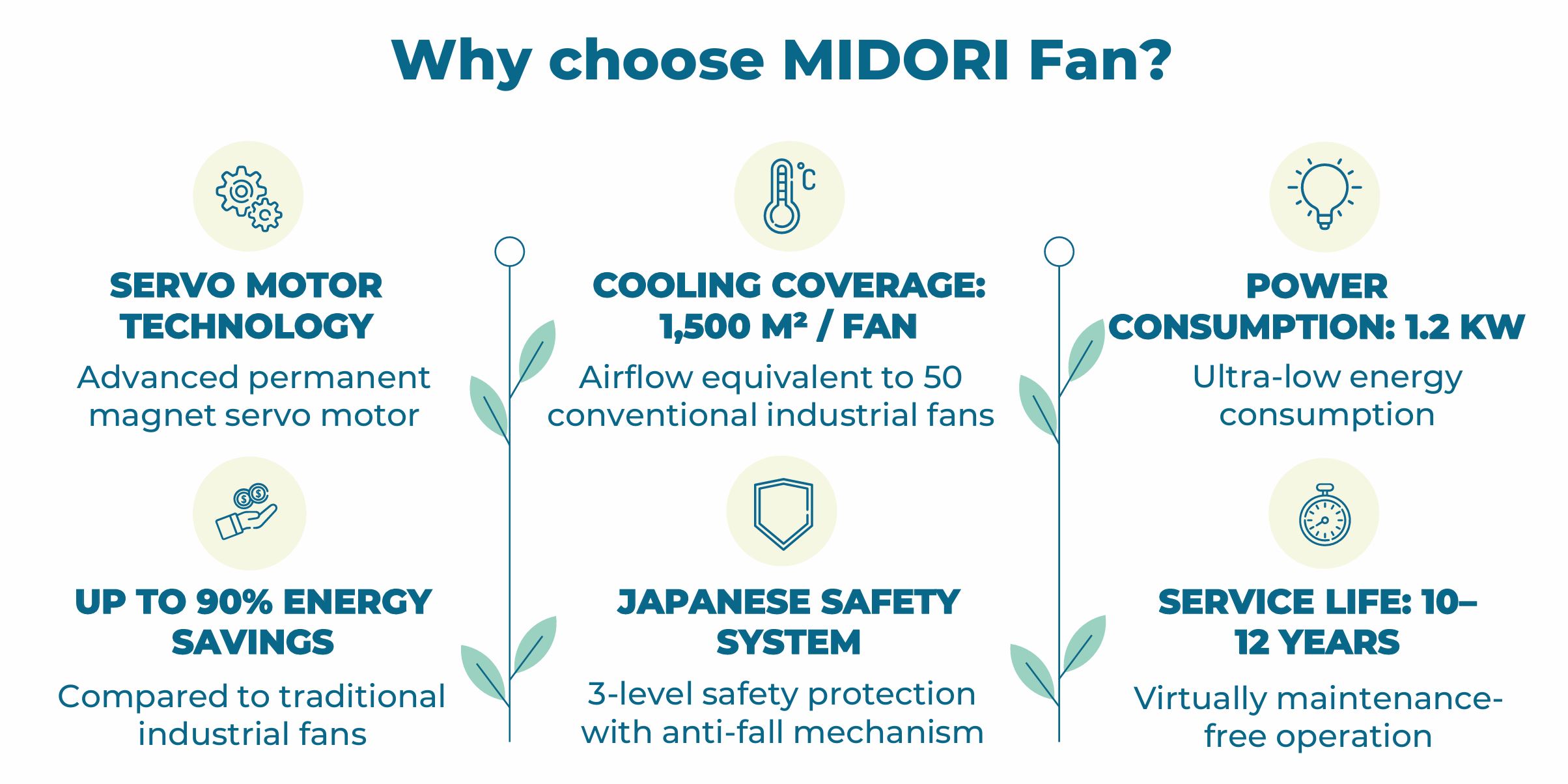
Within the HVLS category, MIDORI Fan is engineered with a focus on long-term operational efficiency rather than peak output performance.
Equipped with high-efficiency motor technology, the system ensures stable operation, low energy consumption, and suitability for continuous industrial duty cycles.
When integrated into a comprehensive cooling strategy, MIDORI Fan functions as a performance enhancer for the Chiller system:
-
Reduces compressor and central equipment load
-
Mitigates electrical peak demand
-
Extends the lifecycle of HVAC assets
-
Maintains consistent and stable airflow conditions over time
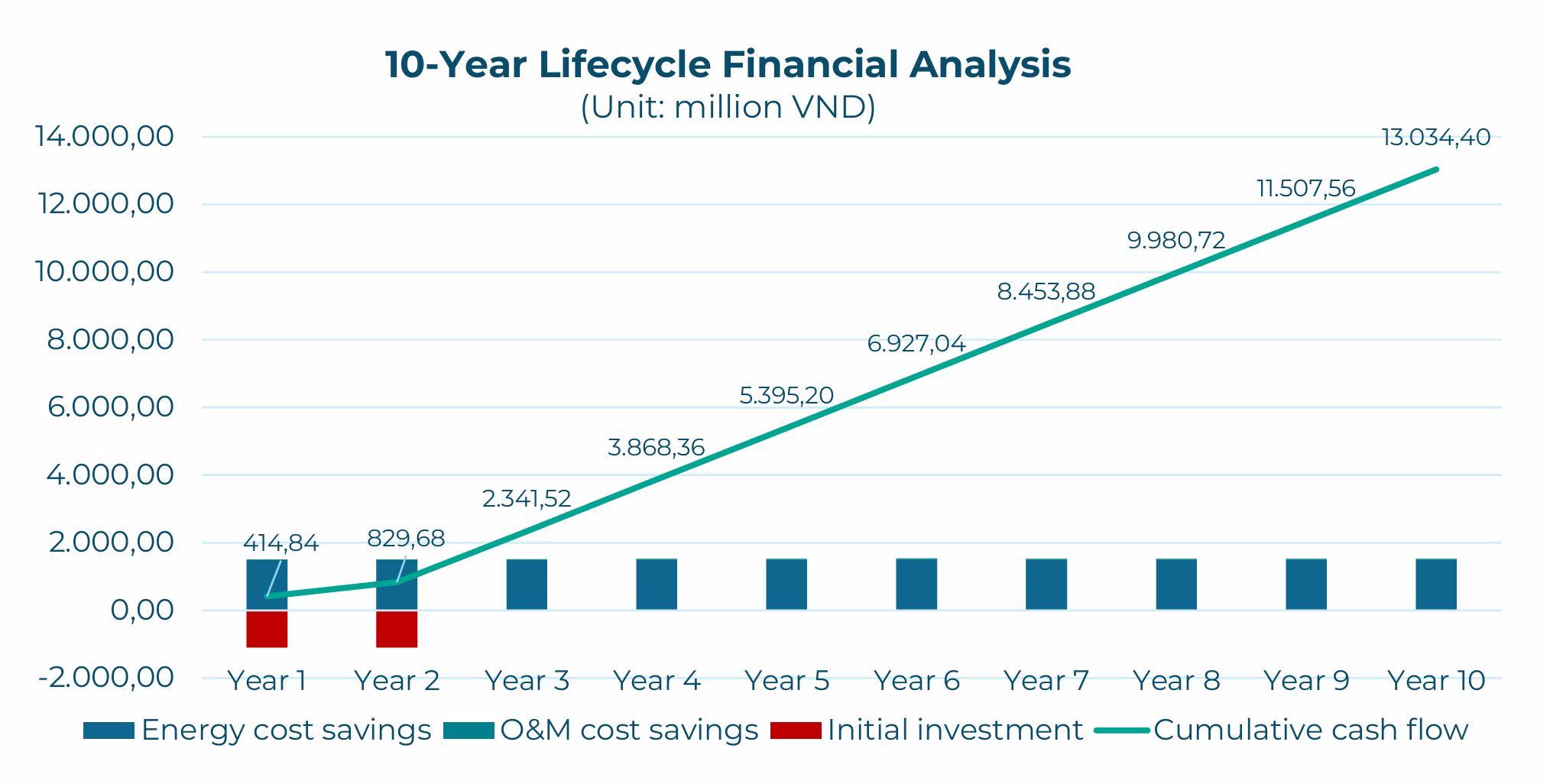
More importantly, it represents a one-time capital investment that generates recurring annual returns throughout the equipment lifecycle — particularly evident when evaluated over extended operational periods.
Value Beyond Energy Savings
Optimizing a cooling system extends beyond reductions in electricity bills. Improved HVAC performance delivers multiple indirect benefits:
-
Lower CO₂ emissions, supporting ESG objectives
-
Enhanced worker health and productivity
-
Reduced maintenance costs and downtime risk
-
Stronger positioning as a modern, energy-conscious manufacturing facility
In today’s competitive production landscape, these advantages are increasingly viewed as strategic differentiators rather than secondary benefits.
Time to Reevaluate Cooling System Strategy
Chillers remain fundamental to modern industrial operations. However, maximizing the value of this significant capital investment requires a holistic approach — one that considers airflow dynamics, load management, and energy efficiency simultaneously.
If your Chiller system is operating reliably yet electricity costs continue to rise and workplace comfort remains suboptimal, it may be time to reconsider a simple but critical question:
Has your factory’s cooling system truly been optimized — or is it merely operating at a basic comfort level?
Contact MTA TECH today — Elevate your factory standards and optimize operational performance.
???? Hotline: +84 98 234 7975
✉️ Email: sales@mtatech.com
???? Website: www.mtatech.com
???? MTA TECH – A Pioneer in Industrial Cooling, Safety & Factory Automation Solutions in Vietnam.